

Did you know that over 80% of people can be uniquely identified online by just four websites they visit? Every search, click, and status update leaves a trail that builds your digital footprint. While this record shapes first impressions and business opportunities, it can also risk your privacy. Learning what forms your digital footprint, and how it follows you, helps you make smarter choices about the traces you leave behind online.
Key Takeaways
| Point | Details |
|---|---|
| Digital Footprint Types | There are two categories of digital footprints: active (intentional actions) and passive (background data collection). Understanding both is crucial for managing online presence. |
| Privacy Risks | Digital footprints can expose individuals to privacy risks such as identity theft and data misuse, necessitating proactive management and awareness of legal protections like GDPR and CCPA. |
| Management Strategies | Effective digital footprint management includes using security tools, monitoring online presence, and being intentional with shared content to build a positive online identity. |
| Impact of Third-Party Interactions | Third-party contributions, like being tagged in photos, can shape one’s digital identity, emphasizing the importance of maintaining control over shared online information. |
Table of Contents
- Defining Digital Footprint And Core Concepts
- Types Of Digital Footprint: Active Vs. Passive
- How Digital Footprints Are Created Online
- Privacy Risks And Legal Considerations
- Managing Your Digital Footprint Effectively
Defining Digital Footprint and Core Concepts
Your digital footprint is essentially your online identity – a comprehensive record of all your digital interactions, activities, and traces left behind across the internet and digital platforms. According to AVG, this footprint comprises two distinct categories: active and passive digital traces that collectively paint a detailed picture of your online presence.
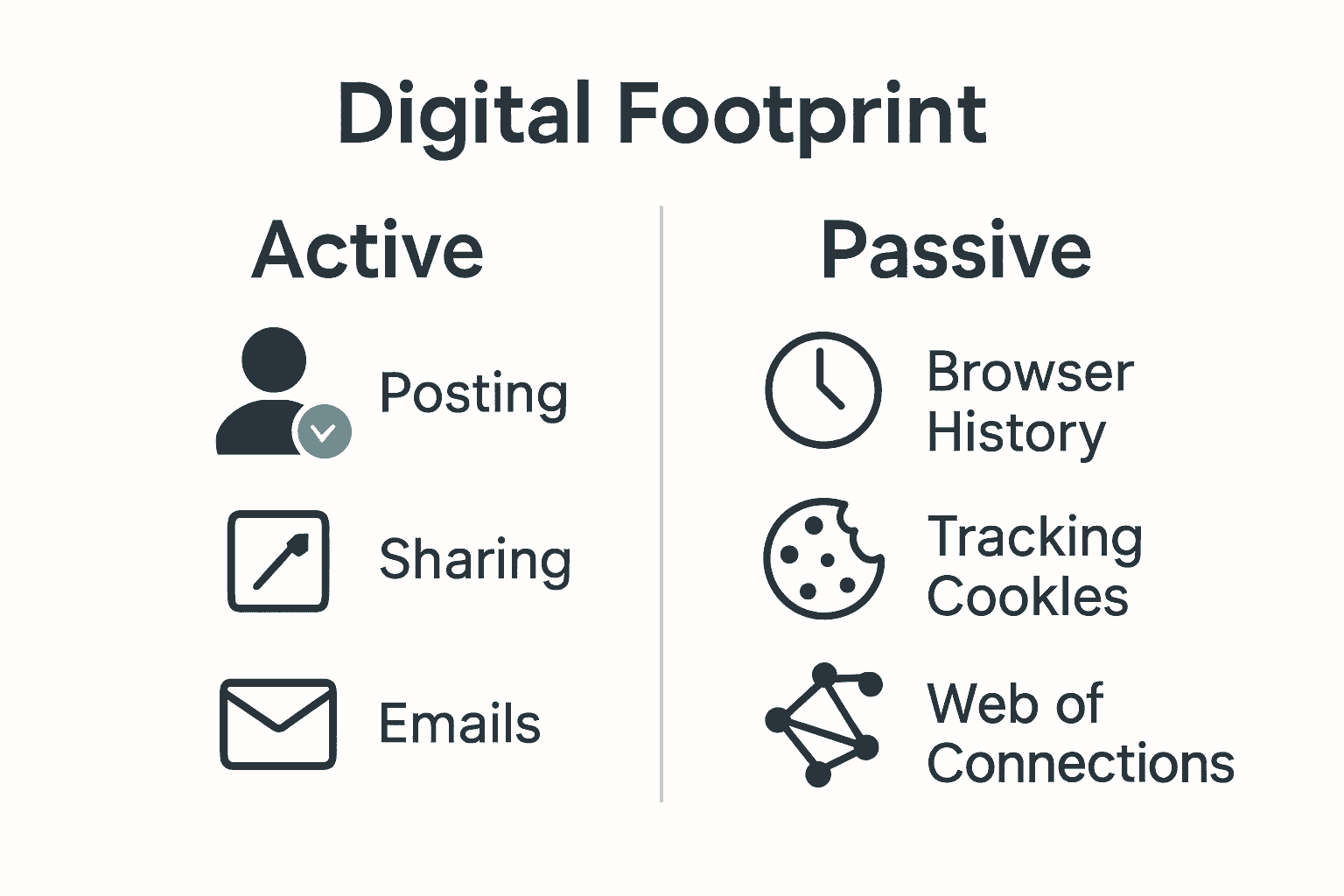
Active digital footprints represent the content you deliberately and consciously share. Think social media posts, emails, blog comments, online reviews, and gaming interactions. These are intentional contributions where you’re directly controlling the narrative and information you’re putting out into the digital world. For businesses, this might include website content, marketing materials, customer communications, and social media engagement.
Conversely, passive digital footprints are the background data collected without your explicit consent or awareness. According to Wikipedia, these include:
- Website tracking cookies
- IP address logs
- Device usage patterns
- Location data
- Browser history
- Smart device interactions
Interestingly, even deleted content can remain part of your digital footprint, highlighting the permanence and complexity of online interactions. Your digital footprint can have significant implications – from personal privacy risks to potential business opportunities and reputation management. Understanding and strategically managing this digital shadow is crucial in today’s interconnected digital landscape.
Types of Digital Footprint: Active vs. Passive
Understanding the nuanced differences between active and passive digital footprints is crucial for businesses and individuals seeking to manage their online presence effectively. According to Norton, these two types of digital traces represent distinctly different approaches to online data generation and sharing.
Active digital footprints are intentional and transparent digital interactions where you consciously contribute information. As Digital Risk Inc explains, these include deliberate actions such as:
- Posting on social media platforms
- Completing online forms
- Sending emails
- Making online purchases
- Writing blog comments
- Sharing professional profiles
In contrast, passive digital footprints emerge without direct user input or awareness. These are data trails automatically collected by websites, apps, and digital platforms. Typical passive footprint elements include:
- Browsing history tracking
- Geolocation data collection
- IP address logging
- Behavioral advertising tracking
- Automatic device usage monitoring
While active footprints offer more user control, passive footprints represent a complex web of background data collection that can significantly impact personal and professional digital reputations. Recognising and managing both types becomes essential in maintaining a strategic and secure online presence.

Here’s a comparison of active and passive digital footprints:
| Aspect | Active Digital Footprint | Passive Digital Footprint |
|---|---|---|
| User Awareness | Conscious, deliberate | Often unnoticed, automatic |
| Typical Activities | Social posts Online forms Emails | Browsing history Cookies Geolocation |
| User Control | High: user chooses what to share | Low: data collected in background |
| Examples (Personal) | Commenting Sharing photos Online reviews | Ad trackers Device metadata IP logging |
| Examples (Business) | Website content Marketing Customer communications | Analytics tracking Device monitoring Cookie collection |
| Privacy Implications | More manageable, but still public | Harder to monitor, often more invasive |
 |
How Digital Footprints Are Created Online
In today’s interconnected digital landscape, your online identity is continuously constructed through a complex network of interactions and data collection. According to research from the ETBI Library, digital footprints emerge through multiple channels, encompassing both deliberate and unconscious digital activities.
Personal contributions form a significant portion of digital footprints. These include intentional actions like:
- Creating social media profiles
- Posting comments and updates
- Making online purchases
- Sending emails
- Filling out digital forms
- Sharing professional information
However, the most fascinating aspect of digital footprint creation lies in passive data generation. A groundbreaking study from ArXiv revealed an astonishing fact: just four most visited web domains can uniquely identify 95% of individuals, with 80% remaining traceable across different time periods. This means even your seemingly innocuous browsing habits contribute to a detailed digital profile.
Additional passive data sources include:
- Location tracking
- Device metadata
- Browsing history
- Internet of Things (IoT) device interactions
- Cookies and tracking pixels
- Automatic system logs
Moreover, digital footprints are not solely self-generated. Third-party interactions like being tagged in photos, mentioned in posts, or included in shared documents also contribute to your online identity, creating a multifaceted digital representation that extends beyond your direct control.
Privacy Risks and Legal Considerations
Digital privacy has become a critical concern in our hyperconnected world, with legal frameworks emerging to protect individuals and businesses from potential data misuse. According to WebGuardian Tech, global data protection laws like the EU’s GDPR, California’s CCPA, and Singapore’s PDPA now establish comprehensive guidelines for personal data collection and management.
These legal frameworks fundamentally focus on user consent and transparency. The Just Laws emphasizes that organizations must ensure users fully understand:
- What specific data is being collected
- How collected data will be used
- Purpose of data collection
- Storage and retention periods
- User rights regarding their personal information
Key legal risks associated with digital footprints include:
- Potential litigation for unauthorized data use
- Significant regulatory fines for non-compliance
- Reputational damage from privacy breaches
- Civil lawsuits stemming from data mishandling
- Potential identity theft vulnerabilities
For businesses and individuals alike, proactively managing digital footprints is no longer optional. Understanding legal requirements, reviewing privacy policies, and maintaining strict data governance practices have become essential strategies in our increasingly digital ecosystem. Learn more about our privacy commitment to protect your digital identity.
Managing Your Digital Footprint Effectively
Digital footprint management has evolved from a technical consideration to a critical personal and professional skill. According to research from the Academic Development Institute, proactive digital identity management involves strategic reflection and intentional online behavior.
Key strategies for effective digital footprint management include:
- Regularly updating software and security tools
- Using virtual private networks (VPNs)
- Implementing robust antivirus protection
- Creating strong, unique passwords
- Backing up critical data
- Monitoring online presence through alert systems
Gravatar’s research suggests leveraging centralized identity services can help maintain consistent, privacy-controlled profiles across multiple platforms. This approach allows individuals to curate a more intentional online persona while minimizing potential risks.
For professionals seeking comprehensive digital identity management, consider developing a strategic digital approach that balances personal privacy with strategic online visibility. This involves carefully reviewing privacy settings, thoughtfully curating shared content, and maintaining a professional yet authentic digital presence that aligns with your personal and career objectives.
Take Control of Your Digital Footprint with Expert Guidance
Struggling to manage your digital footprint or concerned about how online traces might affect your business reputation? Many companies discover too late that both active and passive digital footprints can lead to privacy risks, missed opportunities, and even a loss of customer trust. Modern digital marketing relies on understanding these subtle signals and turning your online presence from a risk into a powerful asset. Our Digital Marketing expertise ensures your visibility is strategic, secure, and structured for measurable growth.

Do not let unmanaged online activity limit your brand’s potential. Partner with our local Australian experts to develop a custom digital strategy that protects your privacy, enhances positive engagement, and secures your competitive edge. Discover how our human-centred approach and over 25 years per specialist can help you build a digital identity you are proud of. Get your complimentary digital audit by reaching out through our contact page. Start shaping your online presence for future success today.
Frequently Asked Questions
What is a digital footprint?
Your digital footprint is your online identity, encompassing all your digital interactions and activities that leave traces across the internet and digital platforms. It includes both active and passive digital traces that contribute to your online presence.
What are the differences between active and passive digital footprints?
Active digital footprints involve intentional actions like social media posts and online purchases, whereas passive digital footprints consist of data collected without direct user awareness, such as browsing history and tracking cookies.
How are digital footprints created?
Digital footprints are created through both deliberate actions, like creating social media profiles and posting content, as well as passive data generation, which includes tracking web activity and device metadata.
What are the privacy risks associated with digital footprints?
Privacy risks linked to digital footprints include unauthorized data use, potential regulatory fines for non-compliance with data protection laws, reputational damage from breaches, and vulnerabilities to identity theft.
